

Feeding Community in the Emerging Sikh Renaissance
Announcement: Starting with next month’s Substack publication, a link to our local community events calendar will be featured at the top of each blog post. All members of the Sangat are welcome to attend these events unless otherwise noted.
A growing number of millennial and Gen Z Sikhs (across various jathebandis and backgrounds) are beginning to think and work beyond long-standing patterns in our community. On social media and in conversations, this shift is increasingly being referred to as the Sikh Renaissance.
This renaissance is visible in the emergence of high-quality Sikh visual art, tools for personal spiritual development, likharis, kirtanis, educational initiatives (from children’s programs to university-level scholarship), greater direct access to primary and secondary Sikh sources, thoughtful statecraft, and deeper theological discussions and debates. What stands out most is that much of this creative and intellectual activity is originating and flourishing outside traditional Gurdwara spaces. The internet and social media have made this possible by allowing direct reach to the Sangat and reducing reliance on older institutional structures lead by committees that are often dominated by older, male, Punjabi voices with more conventional ways of thinking and, at times, a more surface-level engagement with Sikh teachings.
In celebration of this emerging renaissance, here are three trends related to Langar that I believe will gain momentum as our community reconnects more deeply with our history, values, and roots.
1. The majority of food used in Langar will be sourced from Sangat-managed and supported farms and gardens.
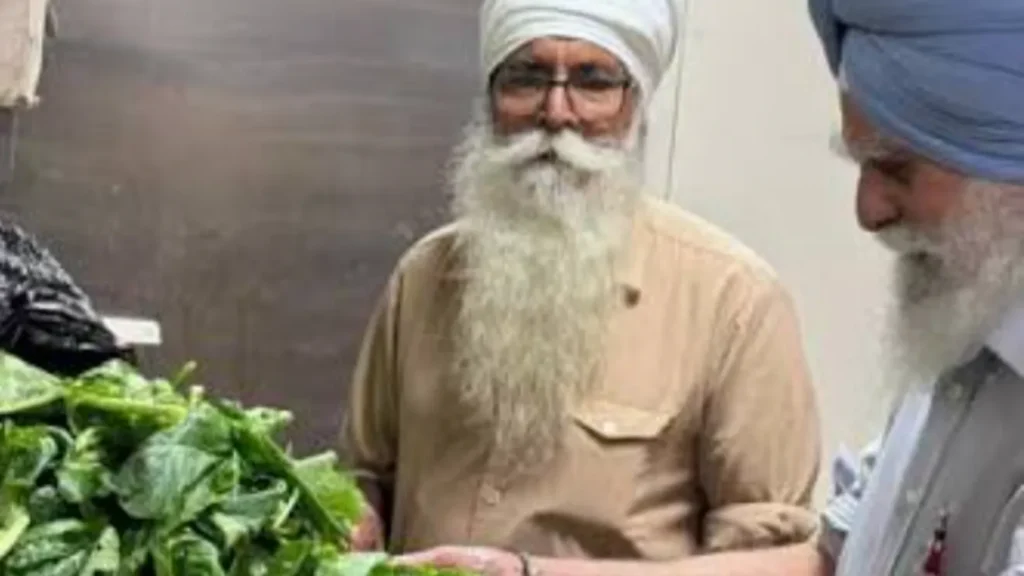
The majority of food currently used in Langar originates from grocery stores (including many processed items) or catering from restaurants. Most of these sources rely on mass-production industrial farms that use chemical-intensive methods, synthetic fertilizers, pesticides, and monocropping1 practices. Food from such systems often contain lower levels of essential micronutrients and vitamins, while carrying potential harmful chemical residues linked to long-term health concerns.
We have to ask ourselves then, is it moral to serve people food that we know, or suspect, could negatively affect their physical health? Most would likely answer “no.” Yet this is what is happening, not only in our homes but also in our congregations and Gurdwaras.
Contrast this with locally grown food from values-minded farms and gardens following ethical, regenerative, and organic principles. We can follow this positive trend through Sangat-managed and supported farms and gardens, whether located in urban, suburban, or rural settings. These efforts produce food without synthetic chemicals, actively improve soil health and the surrounding environment, and rely on voluntary or fairly compensated Sikh labor. Research shows that regenerative and organic practices often result in crops with higher nutrient density, including elevated levels of certain vitamins, minerals, and antioxidants compared to conventional industrial farming.
A few inspiring Sikh initiatives have already embraced these principles in their seva. These examples (whose photos are incorporated throughout this article) highlight what is possible when the Sangat grows its own food with care for both people and the environment.
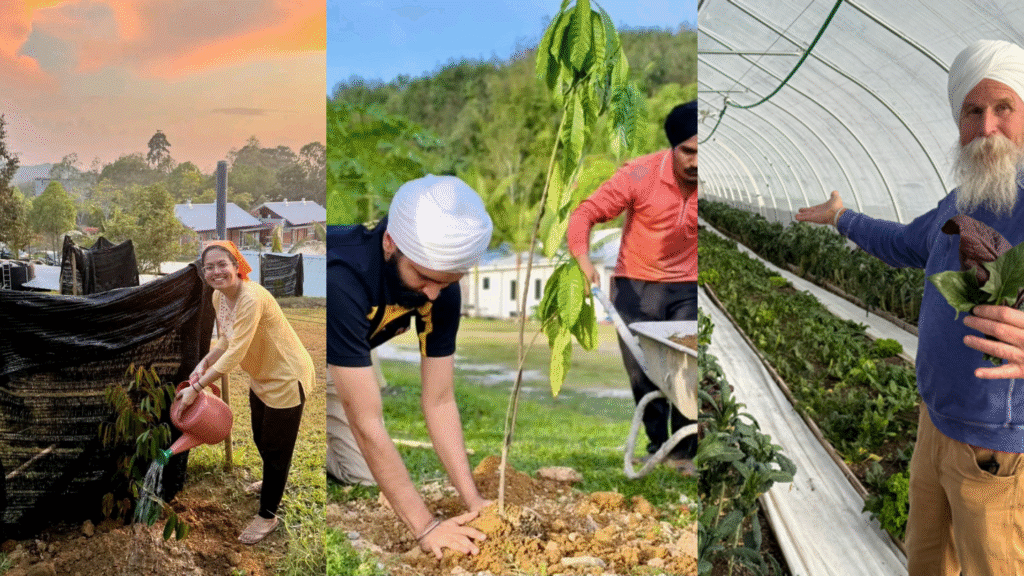
Left and Center: SNSM Khalsa Land (Kuala Kubu Bharu, Malaysia) – Website | Facebook; Right: Siri Vishnu Singh at Khalsa Family Farms (Espanola, New Mexico) – Website | Facebook
2. There will be a historic increase in Sikh organizations establishing partnerships with local community support programs.
If you haven’t done so already, I encourage you to take a short break and do the following. Go to Google and type in your city together with the phrase “food assistance” (e.g., “Dallas food assistance”) and press Enter. Scroll through and briefly explore what is available for individuals facing food insecurity in your area. You can also add the word “Sikh” if you’re having difficulty locating specific Sikh initiatives.
Once you’re done, reflect. How many local Sikh organizations or places of worship are around you? What percentage of those appear on these community resource lists as consistent sources of support? (One-off food drives and donations don not count for this reflection.) When I researched this for my area, only one Gurdwara out of six appeared on the local county food bank resource list (about 17%). Compare that to the number of churches and other faith-based organizations often listed.
Rather than focusing on Gurdwara leadership and complaining about lack of outreach, we can see this as an opportunity for grassroots Sikh organizations (whether nonprofit, educational, recreational, or even for-profit) to step forward and help fill the gap. Below are some creative solutions for those who wish to contribute outside the current Gurdwara system.
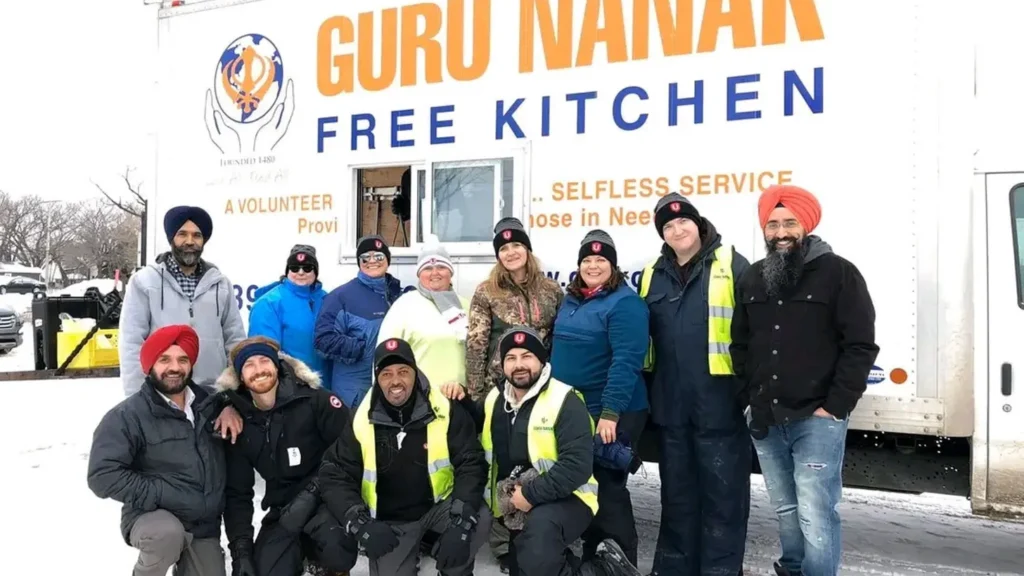
For Cooked Langar:
– Mobile Soup Kitchens / Food Trucks / Vans
For Fresh Produce Distribution:
– Food Box Delivery
– Food Pantry / Food Drive Donations
– Community Fridges
Have a solution not listed? Feel free to reach out so it can be added and all can benefit.
3. The ethnic and religious composition of participants in Langar will diversify beyond current demographics.
This shift builds directly on the second trend. As greater awareness of the Sikh institution of Langar spreads among the wider public (thanks in part to the Sikh Renaissance and creative outreach happening outside traditional Gurdwara spaces) more visitors from varied backgrounds will likely come to partake in Guru Nanak’s Langar. These individuals may not share the same faith or appearance as the majority of the local Sangat (beyond the Indian Hindu visitors already seen in some places).
When this happens, our role will be to ensure the Langar space remains genuinely welcoming and inclusive for everyone, regardless of whether they are part of the Sikh community. True to its founding purpose, Langar has always been open to all, free of discrimination based on faith, ethnicity, or background. By living this principle with warmth, compassion, and humility, we can help turn these moments into opportunities for genuine connection and shared spiritual growth.
Invitation
Did you enjoy reading this article? We invite you to join us as we continue to nurture our own regenerative farming efforts by becoming a member of our WhatsApp group. There, you’ll receive biweekly updates on what we’re doing on the ground while being part of a space of like-minded Sikhs who believe in the beauty and manifestation of Degh-Tegh Fateh!
Until then, stay in Chardi Kala.
- Monocropping is the practice of planting the same crop in the same area, year after year. This is in contrast to crop rotation, which involves growing different crops in succession to maintain soil health.